
If your business doubled its customer base next year, could your application keep up? For an online store, that means shoppers can still check out during a sale. For a software company, it means a new client can import a year of records while existing customers keep using their dashboards. Both businesses are growing, but each needs its application to handle a different kind of demand.
A cloud computing development companycloud computing development company helps you work out what growth will require from your software. Developers look at how customers use the application, find the parts likely to slow down, and design those parts to handle more work. Done well, that gives you room to launch a new service or take on a larger client without committing upfront to infrastructure you may only need a few days a year.
What does a scalable application mean for your business?
A scalable application can handle more work while continuing to meet the standards your customers rely on. Those standards depend on the product. Someone booking an appointment expects to know immediately whether they got the slot. An accountant requesting an annual report may be happy to receive it by email a few minutes later, provided they can keep working while it runs.
This difference matters when you decide where to spend your development budget. Making every report appear instantly could be expensive and add little value. Making sure two people cannot book the same appointment protects a promise your business makes every day. A good cloud development plan starts by identifying those promises and agreeing on how to test them.
How a cloud computing development company plans for growth
Before choosing a cloud platform, developers need to understand what is changing in the business. Are you opening new locations, expecting more visitors from a campaign, or signing customers who bring much larger sets of data? Each answer gives the team a different place to start.
For example, a growing subscription business might expect its next client to bring only 30 new users. That sounds manageable until you learn that each user will regularly search several years of transaction history. A test that simulates thousands of people signing in would miss the problem. Testing searches with a realistic volume of records would show whether the database needs attention before the client joins.
For an existing application, the team can review usage records and trace the steps behind a slow screen. For a new product, it can start with a few business estimates. How many people might use the busiest feature at the same time? How long can they reasonably wait? What would a missed transaction cost? These answers give both the business owner and the developer a clearer brief than a target such as “support 10,000 users.”
How cloud architecture keeps busy features responsive
Cloud infrastructure gives developers the ability to add computing power when demand rises. The design of the application determines whether that extra capacity helps. If an online shop is slow because every visitor downloads the same large product photos, those photos can be served from locations closer to shoppers. If the delay comes from checking stock, the team needs to examine how the application reads and updates inventory.
The same thinking applies to custom web application development. Take a customer portal that lets clients download statements. For a short statement, an immediate download is convenient. For a file covering five years, the portal can accept the request, prepare the file in the background, and tell the client when it is ready. Customers get a feature that matches how they work, and one large download no longer needs to hold up someone checking their balance.
Choosing a cloud platform and managing its cost
The choice between AWS, Microsoft Azure, and Google Cloud starts with what your business already uses and what your team can support. Where does your customer data live? Which tools do your developers know? Will the application run steadily all month, or will it be busiest for a few hours at a time? Those details affect both the architecture and the bill.
If your product already runs on AWS, for instance, Thinkwik’s AWS cloud development services can help you assess which parts of your current setup to keep as you grow. For a new product, a managed application platform and database can be a practical starting point. A team responsible for one product can spend more of its time building the features customers asked for.
Auto-scaling is useful when demand changes throughout the day. It allows an application to add capacity during busy periods and release it as traffic falls. A retailer planning a promotion can also arrange for extra capacity to be ready before the campaign email goes out. The business can then review what it spent per completed order. That figure is more informative than the total cloud bill alone, especially when sales are growing.
Can you scale an existing application without rebuilding it?
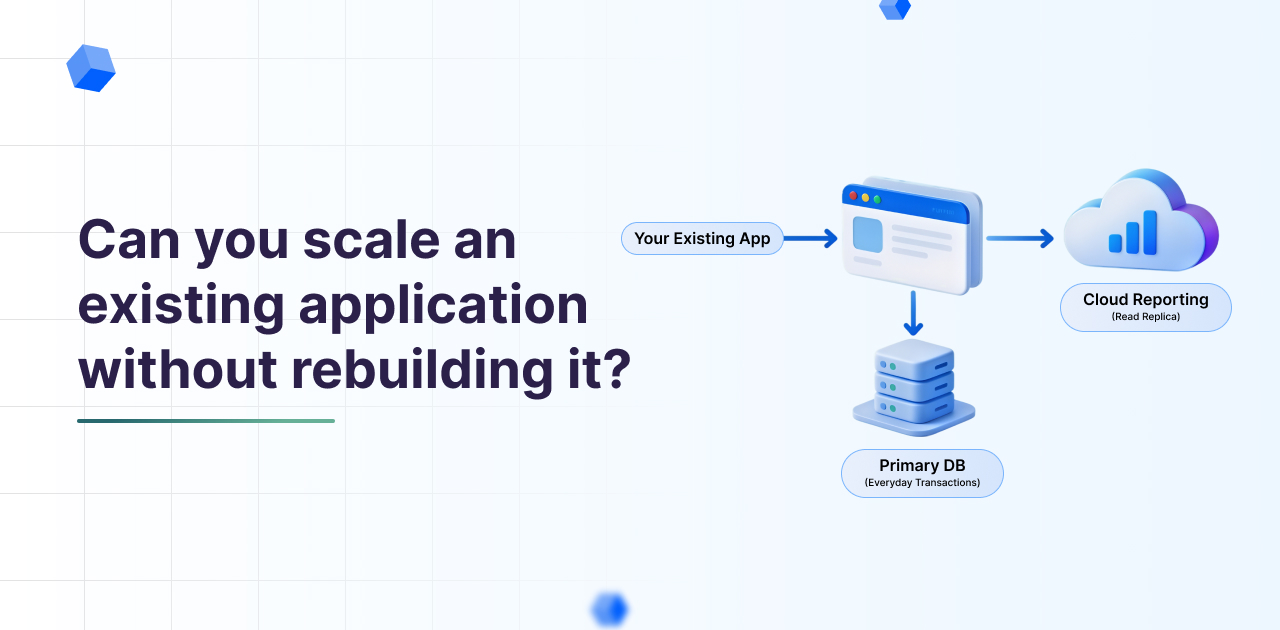
Often, you can. Suppose a company’s internal reporting tool works well for eleven months of the year but slows to a crawl at year-end. Moving the entire system to a larger server might ease the pressure temporarily. The more useful first step is to check whether annual reports compete with everyday transactions for the same database resources. Separating that work may solve the immediate problem with far less disruption.
When a larger change is necessary, cloud migration services can help a business move in stages. A team could migrate reporting first, compare the figures with the existing system, and let staff try it before moving another function. It gets evidence that the new setup can handle real work while there is still time to make adjustments.
Connecting the application to the people who run the business
Sometimes the application can already handle more customers. The delay starts after somebody clicks “Submit.” A sales team might have a fast customer portal but still copy every approved quote into its accounting system. Increasing the portal’s capacity would simply give the team more quotes to enter.
Thinkwik’s business process automation solutions address that part of growth. An approved quote can create a sales order in the company’s ERP system, with a team member reviewing exceptions such as a missing product code. Customers get their orders processed sooner, and sales staff can spend their time helping customers who actually need a conversation.
What to ask before your next launch
Ask your development partner to demonstrate the busiest customer journey using realistic data. If you run a booking platform, have the team show what happens when several customers try to reserve the last available appointment. If you sell subscription software, ask them to run a large customer import while another account uses the product. You should be able to watch the test and recognize the experience your customers will have.
Agree on what happens after launch, too. Who will know if customers start waiting longer? Which measure will tell you whether a larger cloud bill is justified? Writing down those answers gives your team a way to decide when to invest again and which improvement deserves attention first.
At Thinkwik, we offer cloud consulting, cloud application development, migration, and ongoing monitoring for businesses building new products or improving existing ones. If you are preparing for a launch or expansion, tell us which part of the application your customers depend on most and what you expect to change. We can help you turn that into a practical cloud development plan.