
Businesses have been using automation for decades to improve efficiency, reduce manual effort, and streamline repetitive processes. From automated email responses to workflow management systems, traditional automation has helped organizations save time and increase productivity.
However, a new wave of technology is changing the way businesses think about automation. Generative AI is no longer limited to following predefined rules. It can create content, analyze information, understand context, generate insights, and even interact with users in a human-like manner.
As organizations continue their digital transformation journey, many business leaders are asking an important question:
What is the difference between Generative AI and Traditional Automation, and which one is right for my business?
In this article, we'll explore the key differences, use cases, benefits, and how businesses can leverage modern Generative AI solutions to gain a competitive advantage.
Understanding Traditional Automation
Traditional automation refers to systems and software that perform predefined tasks based on specific rules and workflows.
These systems are designed to execute repetitive processes without human intervention. They follow a set of instructions and produce predictable outcomes.
Examples of Traditional Automation
- Automatic invoice processing
- Email marketing workflows
- Customer support ticket routing
- Data entry automation
- Payroll processing
- Inventory management systems
For example, if a customer submits a support request through a website, a traditional automation system can automatically assign the ticket to the appropriate department based on predefined criteria.
The process is efficient, but it can only perform actions that have been programmed in advance.
Key Characteristics of Traditional Automation
- Rule-based execution
- Structured workflows
- Predictable outcomes
- Limited adaptability
- Best for repetitive tasks
Traditional automation works exceptionally well when tasks are repetitive and the decision-making process is straightforward.
What Is Generative AI?
Generative AI is a branch of artificial intelligence that can create new content, generate responses, analyze data, and make contextual decisions based on information it has learned from large datasets.
Unlike traditional automation, Generative AI does not rely solely on predefined rules. Instead, it uses advanced machine learning models and Large Language Models (LLMs) to understand context and generate intelligent outputs.
Examples of Generative AI Applications
- AI chatbots
- Virtual assistants
- AI copilots
- Content generation tools
- Code generation systems
- Document summarization
- Knowledge management assistants
- AI-powered customer support solutions
For instance, a Generative AI chatbot can understand a customer's question, interpret the intent behind it, and generate a personalized response—even if it has never encountered the exact question before.
This level of flexibility makes Generative AI significantly more powerful than traditional automation in many business scenarios.
| Feature | Traditional Automation | Generative AI |
|---|---|---|
| Decision Making | Rule-based | Context-based |
| Flexibility | Limited | Highly adaptable |
| Learning Capability | No | Yes |
| Content Creation | Not possible | Can generate content |
| Human-like Interaction | Minimal | Advanced |
| Data Processing | Structured data only | Structured and unstructured data |
| Problem Solving | Predefined scenarios | Dynamic scenarios |
| Scalability | Moderate | High |
The biggest distinction is that traditional automation executes instructions, while Generative AI can interpret information and create responses.
How Traditional Automation Works
Traditional automation follows an "If This, Then That" approach.
For example:
- If a customer fills out a form → send confirmation email.
- If an invoice exceeds a certain amount → notify the finance manager.
- If inventory falls below a threshold → create a purchase request.
The system cannot think beyond the rules it has been given.
This makes traditional automation reliable but limited when dealing with complex or unpredictable situations.
How Generative AI Works
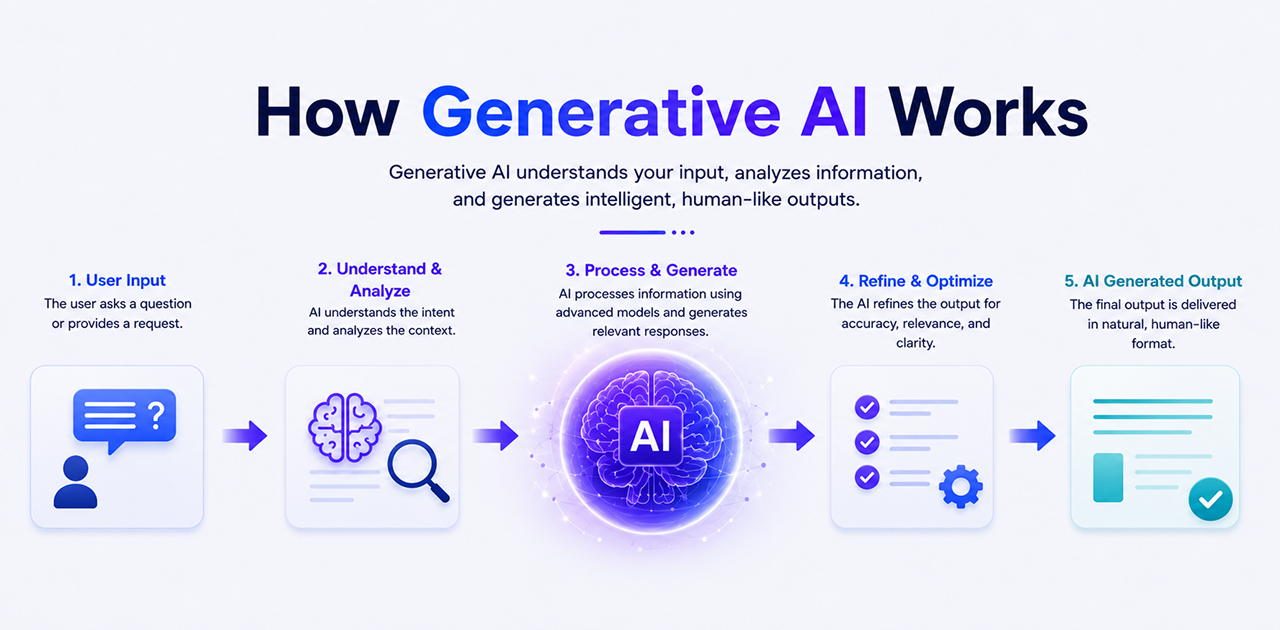
Generative AI operates differently.
Instead of following strict rules, it analyzes context, patterns, and relationships within data to generate meaningful outputs.
For example:
A customer asks:
"Can you recommend the best product for my business based on my budget and industry?"
A traditional automation system may not be able to answer.
A Generative AI system can:
- Understand the request
- Analyze available information
- Compare options
- Generate a personalized recommendation
This ability to reason through information creates a more intelligent and human-like experience.
Business Benefits of Traditional Automation
Traditional automation remains valuable for many organizations.
Key Benefits
1. Increased Efficiency
Routine tasks can be completed faster without manual involvement.
2. Reduced Errors
Automation minimizes mistakes caused by repetitive human work.
3. Cost Savings
Businesses can reduce operational expenses by automating workflows.
4. Consistency
Tasks are performed the same way every time.
For organizations with highly structured processes, traditional automation continues to provide significant value.
Business Benefits of Generative AI
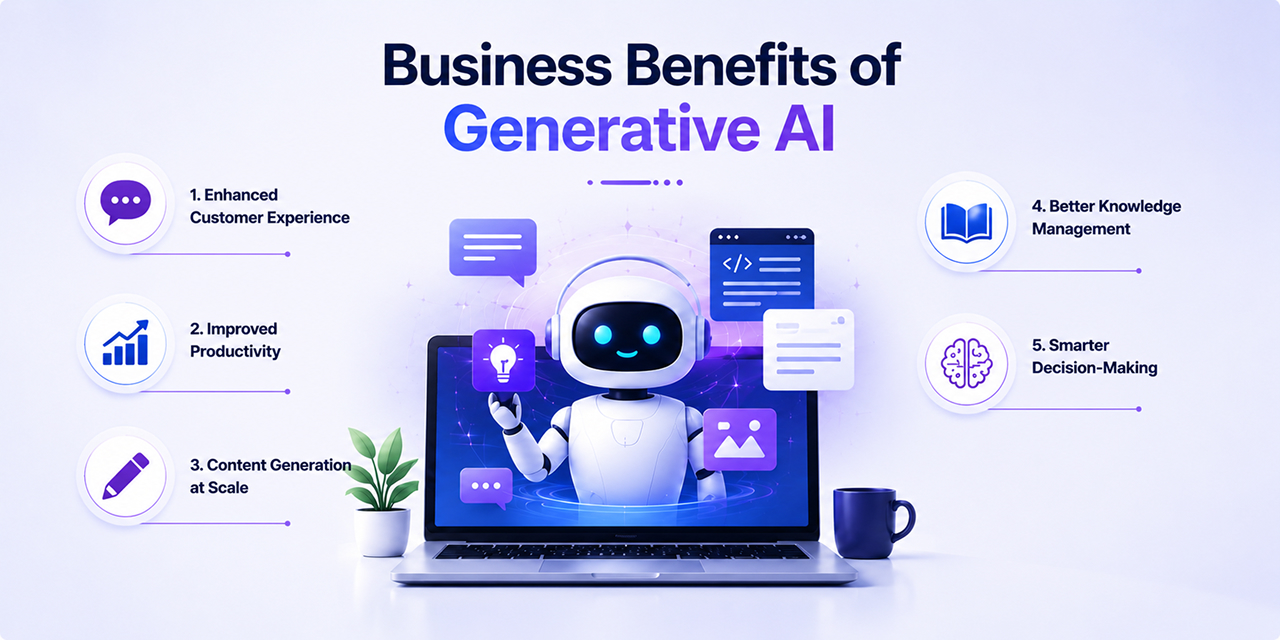
Generative AI takes automation to the next level by enabling intelligent decision-making and content generation.
1. Enhanced Customer Experience
AI-powered chatbots and virtual assistants provide personalized interactions 24/7.
2. Improved Productivity
Employees spend less time on repetitive knowledge-based tasks.
3. Content Generation at Scale
Generative AI can create:
- Marketing content
- Product descriptions
- Reports
- Emails
- Documentation
4. Better Knowledge Management
AI can instantly retrieve information from company databases and documents.
5. Smarter Decision-Making
Businesses gain insights from large volumes of data much faster than traditional methods.
When Should Businesses Use Traditional Automation?
Traditional automation is ideal when:
- Processes are repetitive
- Workflows are predictable
- Rules rarely change
- Structured data is involved
Examples include:
- Payroll systems
- Invoice processing
- CRM workflow automation
- Data synchronization
These processes do not require contextual understanding or creativity.
When Should Businesses Use Generative AI?
Generative AI is best suited for:
- Customer support
- Knowledge management
- Personalized recommendations
- Content creation
- Research and analysis
- Conversational AI applications
- AI copilots and virtual assistants
Businesses that need intelligent interactions and dynamic responses can benefit significantly from Generative AI development services.
The Future: Combining Generative AI and Automation
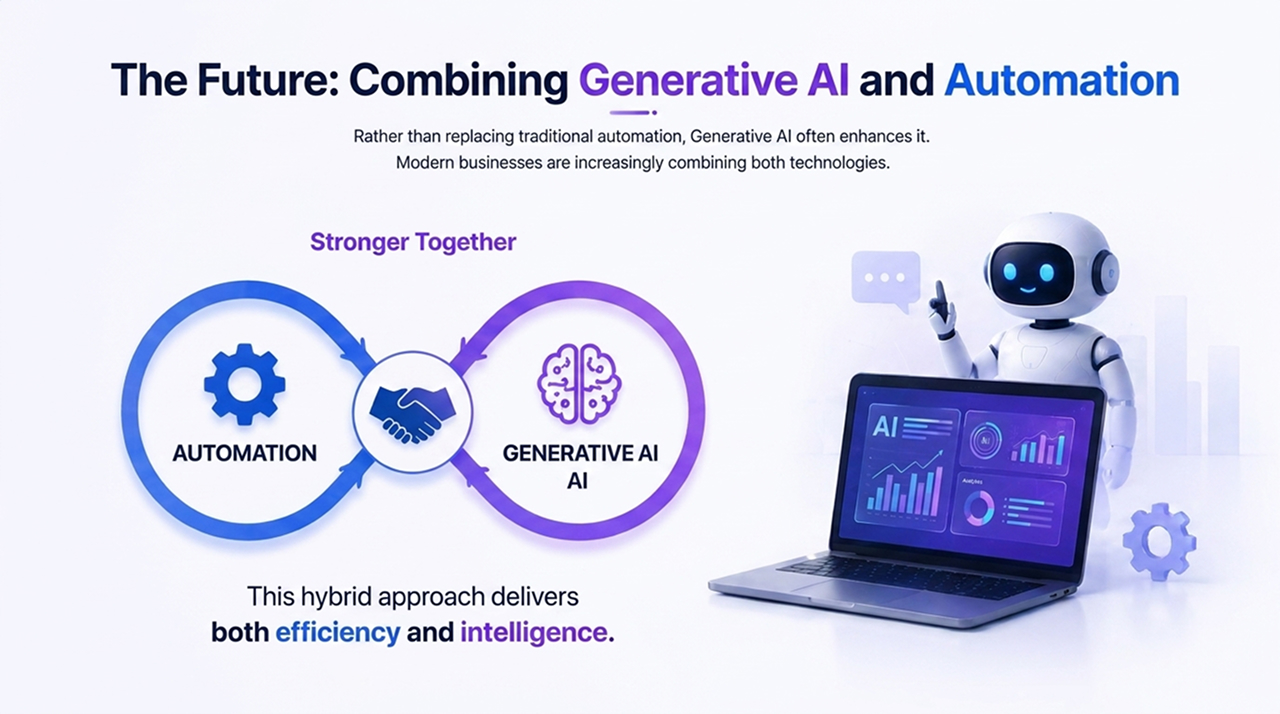
Rather than replacing traditional automation, Generative AI often enhances it.
Modern businesses are increasingly combining both technologies.
For example:
A customer support system may use:
- Traditional automation to route tickets
- Generative AI to generate responses
An HR platform may use:
- Automation to collect employee data
- Generative AI to answer employee questions
This hybrid approach delivers both efficiency and intelligence.
Organizations that integrate automation with custom Generative AI solutions are creating smarter workflows, improving customer experiences, and unlocking new opportunities for growth.
How Thinkwik Helps Businesses Build Generative AI Solutions
As businesses seek to move beyond basic automation, choosing the right technology partner becomes critical.
At Thinkwik, we help organizations design, develop, and deploy custom Generative AI solutions tailored to their specific business needs.
Our expertise includes:
- Generative AI Development
- AI Chatbot Development
- AI Agent Development
- AI Copilot Solutions
- Large Language Model (LLM) Integration
- Retrieval-Augmented Generation (RAG) Systems
- Enterprise AI Solutions
- AI Consulting Services
Whether you're looking to automate customer interactions, improve internal productivity, or build innovative AI-powered products, our team can help you transform ideas into scalable AI solutions.
Learn more about our Generative AI services: